
Every year, millions of patients face a temporary, elevated risk of pulmonary embolism (PE) — a clot that travels to the lungs. Patients in the ICU or after major trauma, and patients undergoing deep-vein thrombosis (DVT) clearance procedures, are often at their highest risk for only a matter of days. The challenge is protecting them during that window without leaving something behind that creates new problems later.
The problem with permanent filters
Traditional inferior vena cava (IVC) filters are designed to stay in the body permanently, and that permanence is the source of their most serious problems. Permanent filters are associated with complications including fracture, perforation of the vessel wall, and migration. And because retrieval is a separate procedure that is easy to defer, a large share of filters intended to be temporary are simply never removed — by some estimates, up to 70% — leaving patients exposed to long-term risks such as caval occlusion.
For a patient whose PE risk is transient, a permanent implant is a poor match for the problem. AngioShield is designed around the opposite premise: protect the patient now, and leave nothing behind.
How AngioShield is designed for safety
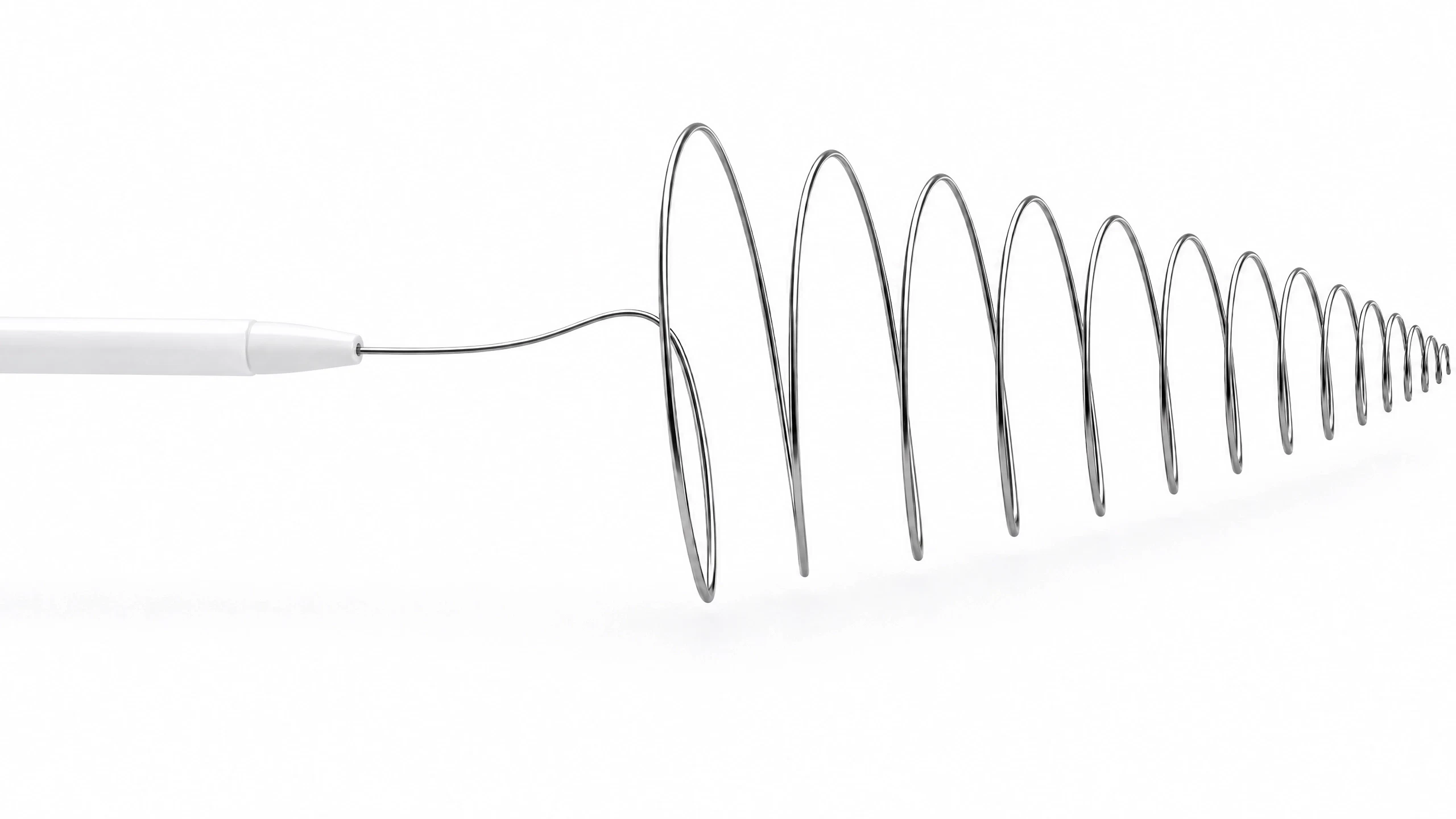
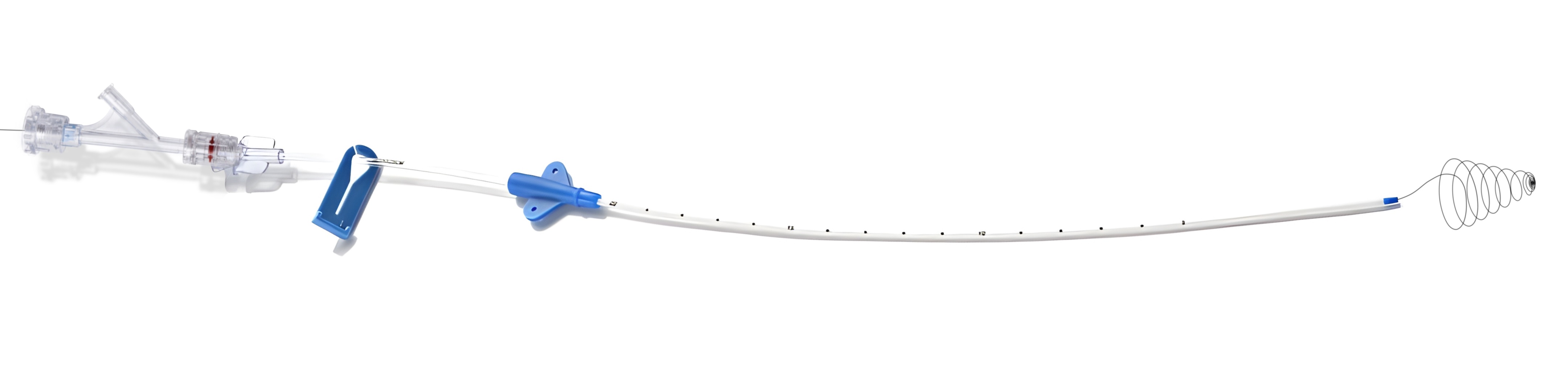
AngioShield is a single-component, smooth, flexible filter built on a 0.035-inch nitinol wire. It has no struts — the rigid arms that, on conventional filters, can fracture or perforate the vessel wall. It is intended to remain in the body only temporarily, for a maximum of about seven days, and it is tethered to prevent migration.
Because it is a wire-based device, AngioShield is designed to be placed through a small 4F sheath — alongside thrombectomy and thrombolysis catheters, through standard angiographic or thrombolysis catheters, or through an existing central line. Its simple tethered deployment and retrieval mechanism is intended to allow safe removal at the bedside, and to reduce trauma even in the event that an ICU patient inadvertently disturbs the device.
Design at a glance
- Construction
- Single-component nitinol, strutless
- Wire
- 0.035 in
- Delivery
- Through a 4F sheath
- Dwell time
- Temporary — up to ~7 days
- Retrieval
- Tethered, designed for bedside removal
Cross Capture design
The filtering element uses a coiled geometry that Principal Medical calls Cross Capture, intended to present a higher clot-capture surface than many conventional IVC filters. In bench testing of nitinol prototypes, the design captured clot under both venous and arterial flow conditions and remained easily retrievable — an important property for a device meant to protect the patient and then be removed.

ICU and intraprocedural use
AngioShield is designed for two closely related settings. In the ICU, it is intended to provide temporary PE protection for critically ill and trauma patients — including those who cannot safely receive chemical prophylaxis and for whom a permanent filter would be inappropriate. In an intraprocedural setting, it is intended to protect patients during DVT clearance and thrombectomy procedures, where dislodged clot poses an acute embolic risk. Because it sits on a wire, it can also serve as a working wire during a procedure and provide a route to infuse thrombolytics.
Investigational status: Principal Medical's portfolio platforms and the products referenced here are currently in development and are not yet cleared or approved by the U.S. Food and Drug Administration.